
A Practical Guide to Mould Resistant Coatings
November 10, 2026by Uncategorized0
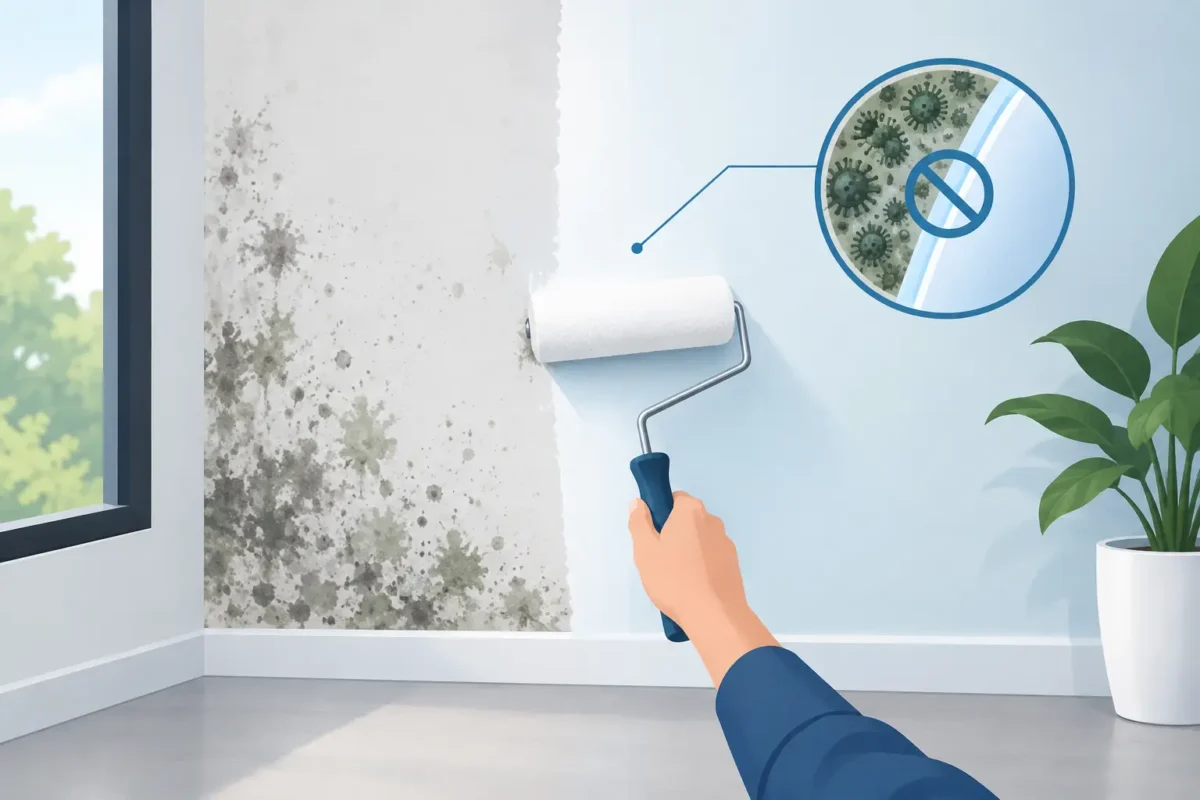
A bathroom ceiling that keeps spotting through after every repaint is not simply a painting problem. It is usually a moisture, ventilation or surface-preparation problem that paint alone cannot fix. This guide to mould resistant coatings explains where these products help, where they fall short, and how to achieve a finish that stays cleaner for longer in Brisbane properties.
Mould is common in Queensland homes and commercial buildings because warm, humid air meets cooler surfaces, particularly in bathrooms, laundries, kitchens, bedrooms and poorly ventilated rooms. Rental properties, older homes and spaces that are closed up for long periods can be especially prone to it. A mould resistant coating can be a valuable part of the solution, but it needs to be selected and applied as part of a proper maintenance plan.
What mould resistant coatings actually do
Mould resistant coatings are paints or clear protective coatings formulated with additives that inhibit mould and mildew growth on the painted surface. They are commonly used on interior ceilings, walls, wet-area linings, rendered surfaces and other areas exposed to recurring humidity.
The key phrase is on the painted surface. These coatings can make the finish less hospitable to mould and easier to clean, but they do not remove moisture trapped behind a wall, repair a leaking roof, or solve condensation caused by poor airflow. If spores are feeding on dust, soap residue or damp plasterboard, a better paint system may slow regrowth, but it will not permanently overcome the cause.
For property managers and homeowners, this distinction matters. Repainting over visible mould without cleaning and drying the area can leave staining, odour and ongoing tenant complaints. In some cases, the coating may fail early because the underlying surface remains damp.
Where mould resistant paint is most useful
A quality mould resistant paint system is most effective in areas where humidity is regular but controllable. Bathrooms and laundries are obvious examples, especially on ceilings above showers or near drying areas. Kitchens can also benefit, particularly where cooking vapour builds up and extraction is limited.
Bedrooms with external walls, wardrobes against cooler masonry and rooms with limited cross-ventilation may need attention too. In Brisbane, summer humidity can expose weak points in a building quickly. Air-conditioned rooms can also develop condensation if warm humid air reaches cold surfaces.
For commercial premises, mould resistant coatings are worth considering in amenities, staff kitchens, childcare facilities, changing rooms and vacant tenancy spaces. The right finish supports a cleaner presentation and can reduce the frequency of cosmetic touch-ups. It is not a substitute for building repairs, but it is a sensible finishing layer once those repairs are complete.
Start with the moisture source
Before choosing a coating, identify why mould has appeared. This is the step that separates a lasting result from a short-lived cover-up. Look for patterns: is mould concentrated above a shower, around window frames, beneath a roof line, behind furniture or on one external wall?
A ceiling affected mainly after showers may indicate inadequate exhaust ventilation. Mould around windows can point to condensation, while a localised patch that remains damp may suggest a plumbing leak, roof leak or failed waterproofing. Blistering paint, soft plaster, salt deposits on masonry and a persistent musty smell all warrant further investigation before painting starts.
Improving extraction, repairing leaks, clearing blocked gutters, sealing external cracks and allowing wet areas to dry properly can make a major difference. In rentals or strata properties, documenting the location and likely cause also helps property managers direct maintenance work appropriately.
Cleaning and preparation come before coating
The coating will only perform as well as the surface beneath it. Existing mould must be treated safely and thoroughly, not painted over. The area should be cleaned using a suitable mould treatment in accordance with the product instructions, then wiped or rinsed as required and allowed to dry completely.
Avoid aggressive dry sanding on mould-affected surfaces. It can spread spores and create unnecessary dust. Personal protective equipment, ventilation and containment are sensible precautions, particularly for larger affected areas. Where mould damage is extensive, recurring or linked to water intrusion, professional assessment may be the safer option.
Once clean and dry, the surface should be checked for peeling paint, loose plaster, water staining and cracks. Failed paint needs to be removed, repairs completed and dusty surfaces sealed where required. A stain-blocking primer may be necessary for old water marks, but only after the leak or moisture source has been fixed. Applying primer over a still-damp ceiling is a common cause of early failure.
Choosing the right coating system
Not every mould resistant product suits every surface. Bathrooms and laundries generally need a washable, moisture-tolerant interior acrylic coating with mould resistance. Ceilings often benefit from a low-sheen or ceiling-specific finish that maintains a neat appearance while coping with humidity. Walls may need a more washable finish because they collect residue and require regular cleaning.
For exterior work, use an exterior-grade system designed for the substrate, whether it is rendered masonry, fibre cement, timber or previously painted surfaces. Exterior mould is often connected to shade, trees, blocked drainage, poor runoff or surface contamination. The coating must tolerate sunlight and rain as well as resist biological growth.
Sheen level involves a trade-off. Higher-sheen paints are generally easier to wipe clean, but they can highlight patching and uneven wall surfaces. Lower-sheen finishes hide imperfections better but may be less forgiving in high-contact areas. A professional painter can match the coating, primer and finish level to the room, condition of the substrate and expected use.
Do not rely on vague labels alone. Check that the product is specified for wet areas or exterior conditions where relevant, and follow the manufacturer’s preparation, coverage and drying requirements. Using a premium topcoat over an unsuitable primer, or thinning it beyond the recommendation, can compromise the system.
Application details that affect performance
Mould resistant coatings need the same disciplined application as any quality paint job. The room should be dry, clean and adequately ventilated. Applying paint during very humid conditions, onto damp substrates or before repair compounds have cured can trap moisture and affect adhesion.
Coverage also matters. One thin coat is rarely enough to provide the intended finish or durability. Apply the recommended number of coats at the stated spread rate, and allow the required drying time between coats. Rushing a bathroom back into service before the coating has properly cured can leave the new surface vulnerable.
Ceilings deserve particular care because they are often where steam settles. Cutting around exhaust grilles, light fittings and cornices neatly is important, but so is checking that the exhaust fan actually removes moist air outdoors. A freshly coated ceiling paired with an ineffective fan will still face the same humid conditions as before.
Maintenance that keeps mould from returning
After painting, simple habits protect the result. Run bathroom exhaust fans during showers and for a period afterwards. Open windows where practical, wipe down heavy condensation, and avoid drying large loads of washing indoors without ventilation. Keep furniture slightly clear of external walls so air can circulate.
Regular cleaning is equally useful. Dust and residue give mould something to settle on, even where paint contains mould-resistant additives. Use a mild cleaner suitable for the coating and avoid harsh abrasion that can damage the paint film. If small spots appear, address them early rather than waiting for a larger outbreak.
For investment properties and commercial sites, scheduled inspections can identify leaks, failed sealant, damaged exhaust fans and early mould marks before they become a larger rectification job. This is often more cost-effective than repeated repainting between tenancies or after complaints.
When professional painting support is the better option
A small, isolated mark in a well-ventilated room may be straightforward to clean and monitor. Larger mould areas, repeated ceiling staining, peeling finishes or suspected water damage need a more methodical approach. The job may involve plaster repairs, sealing, painting, roof or gutter repairs, ventilation improvements and ongoing maintenance.
M&M Handyman can assess the condition of affected surfaces and complete the preparation, repairs and professional coating work needed for a clean, durable finish. For homeowners, property managers and commercial operators, using one dependable contractor can reduce delays between identifying the problem and completing the repair.
The best result is not simply a freshly painted room. It is a dry, prepared and properly ventilated space with a coating system suited to how the property is used.