
Timber Rot Repair for Brisbane Properties
November 8, 2026by Uncategorized0
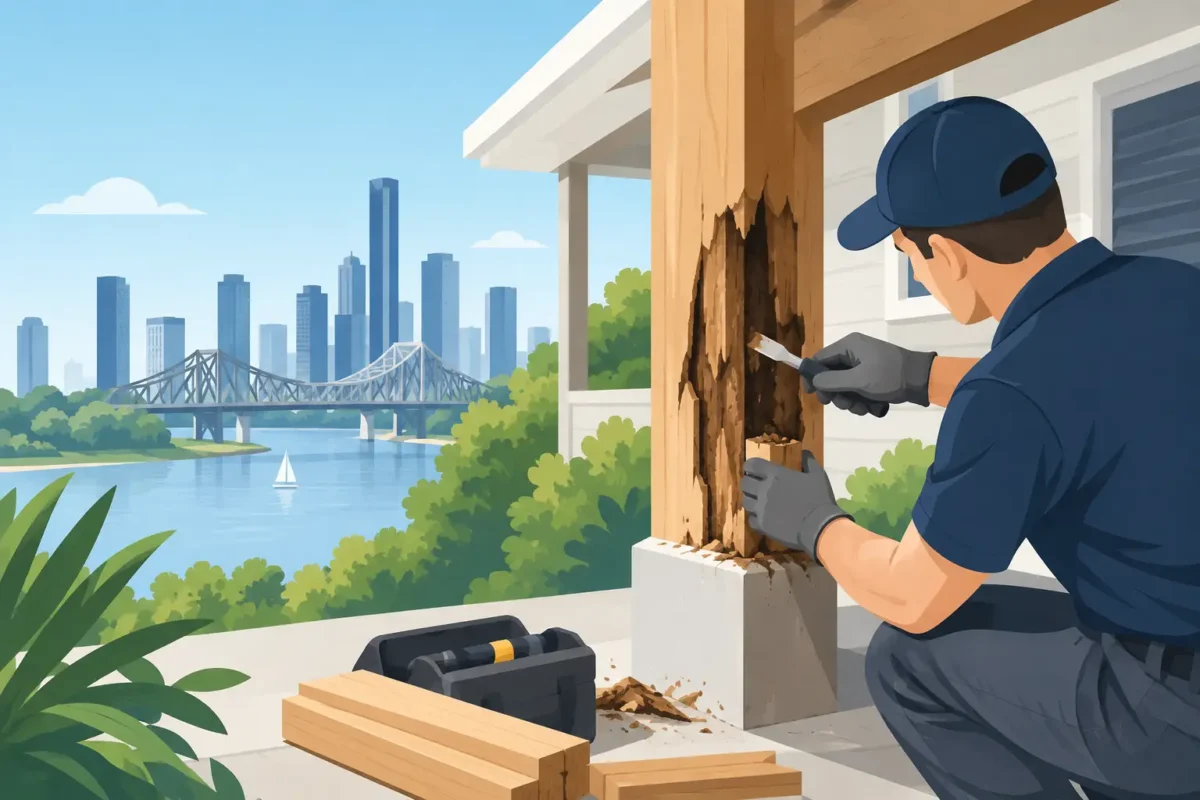
A soft window sill, peeling paint around a fascia board or a door frame that feels spongy after rain can be more than a cosmetic problem. Timber rot repair addresses the damaged material, but lasting results depend on finding and fixing the moisture source first. In Brisbane, regular heavy rain, humidity and strong sun can put exterior timber under constant pressure, particularly where paintwork, flashing or drainage has been neglected.
Rot rarely stays neatly contained. Water enters through a failed paint film, open joint, cracked sealant, leaking gutter or poorly detailed flashing. Once timber remains damp for long enough, fungal decay can take hold and gradually weaken the board, frame or structural member. Early action is usually simpler and more cost-effective than waiting until a small repair becomes widespread replacement.
What Causes Timber Rot in Brisbane Homes?
Timber does not rot simply because it gets wet. It rots when it cannot dry properly. A well-painted, well-drained timber surface can cope with rain. The concern is repeated or trapped moisture that keeps the timber damp over time.
Common problem areas include timber window sills and reveals, external door jambs, fascia and barge boards, verandah posts, deck framing, weatherboards, eaves and timber around roof penetrations. Older homes can be especially vulnerable where previous repairs have been painted over rather than properly prepared and sealed.
A leaking gutter is a frequent culprit. Overflowing water can repeatedly soak fascia boards and eaves, while blocked downpipes can force water back into areas not designed to handle it. Around windows and doors, failed caulking, worn paint and gaps at joints allow water behind the visible surface. On decks, poor ventilation beneath the boards or ground contact can keep framing wet long after rain has stopped.
Termites can also damage timber, but they are not the same as rot. Both can leave timber hollow or weak, and both require prompt assessment. A repair contractor may identify signs that warrant a separate pest inspection before repair work begins.
Signs You Need Timber Rot Repair
Rot can hide beneath sound-looking paint, so visual checks alone are not always enough. Press gently around suspect areas with a screwdriver or similar tool. Sound timber should be firm. Timber that gives way easily, flakes apart or feels soft needs closer attention.
Look for these warning signs around your property:
- Bubbling, cracking or persistently peeling paint, especially near joins and edges
- Dark staining, soft patches, splits or timber fibres that crumble when touched
- Gaps opening around window frames, doors, weatherboards or verandah posts
- Musty odours, persistent leaks, overflowing gutters or water marks nearby
Doors and windows may also start sticking because moisture has swollen the surrounding timber. This does not always mean rot, but it is a reason to inspect the area rather than forcing the door or applying another coat of paint.
For property managers and real estate professionals, regular inspections between tenancies are particularly worthwhile. A small deteriorated sill or fascia board can affect presentation, create water-entry risks and become a larger maintenance issue if left through another wet season.
Timber Rot Repair Starts With the Cause
The most reliable repair process begins with investigation, not filler. If the source of water is still active, even high-quality repair products and fresh paint will eventually fail.
First, the affected area should be inspected to establish how far the decay extends. Surface staining may involve only a small section, while soft timber around a window can continue behind cladding, trims or paint. The condition of nearby boards, fixings, flashing, gutters and sealant should also be checked.
Next, the moisture issue needs to be rectified. Depending on the location, that may mean repairing a gutter, clearing a downpipe, renewing failed sealant, improving flashing, correcting a roof leak or restoring protective paintwork. On a deck or post, it may involve improving drainage and airflow or preventing soil and garden mulch from sitting against timber.
Only then should the damaged timber be removed. Decayed material is cut back to firm, dry timber. The right method from that point depends on the size of the affected area and the purpose of the timber component.
When a Localised Repair Is Suitable
A localised repair can be a practical option when decay is limited and the remaining timber is sound. Small sections of a window sill, weatherboard edge or decorative trim may be rebuilt using a compatible timber repair system after all soft material has been removed.
Preparation matters. The area must be dry, clean and properly shaped so the repair bonds securely. Once cured, it is sanded, primed and painted as part of a complete coating system. Simply filling over soft or wet timber may look acceptable for a short time, but it will not restore strength or prevent the problem returning.
When Timber Replacement Is the Better Option
Replacement is generally the better choice where rot is extensive, the affected timber carries load, or the section cannot be confidently dried and repaired. Fascia boards, deck joists, posts, window frames and door jambs can all require partial or full replacement when decay has compromised their integrity.
This is not a failure of the repair process. Replacing a severely damaged section is often the safest and most economical long-term decision, particularly when it allows the surrounding flashing, drainage and paint details to be corrected at the same time.
Where structural timber is affected, the work may require an appropriately qualified trade professional and, depending on the scope, further assessment. Cosmetic patching is not an acceptable substitute for a sound structural repair.
Why Painting Over Rot Does Not Work
Exterior paint is a protective finish, not a cure for decayed timber. It can slow moisture entry when applied to a dry, stable surface, but it cannot dry timber that is already wet behind the coating. It also cannot restore wood fibres that fungi have broken down.
Painting over a soft sill or swollen frame often traps the issue from view. The new finish may crack or blister as moisture continues moving through the timber, leaving a more expensive repair later. The same applies to applying fresh sealant across a joint without removing failed material or addressing the water path behind it.
A quality result relies on sound preparation: remove damaged timber, repair the cause, allow the area to dry, prime exposed surfaces and apply suitable exterior coatings. This approach protects both the appearance of the property and the work beneath the paint.
Preventing Future Rot
Good maintenance is the most effective protection against repeat rot. Exterior timber should be checked at least annually, and after prolonged rain or storms. Pay close attention to the places where water naturally collects or changes direction, including roof edges, window heads, deck connections and the base of posts.
Keep gutters and downpipes clear so water flows away from the building. Repair cracked paint, open joints and damaged sealant before water can work behind them. Trim back plants that hold moisture against weatherboards or restrict airflow around decks and external walls. If repainting is due, do not wait until bare timber is exposed across large areas.
For commercial properties, strata sites and rental portfolios, scheduled maintenance helps avoid reactive call-outs and protects the building’s presentation. Combining minor carpentry repairs with painting, plastering and exterior maintenance can also reduce disruption by dealing with related issues in one planned visit.
M&M Handyman can assess visible timber deterioration alongside the surrounding painting, roofline and maintenance needs, helping Brisbane property owners choose a repair scope that suits the condition of the building. A clear assessment before work starts makes it easier to plan around tenants, weather and property access.
If you have noticed soft timber, recurring peeling paint or water marks around an opening, arrange an inspection before the next period of heavy rain. Addressing the water path and the damaged timber together gives your property the best chance of staying dry, sound and well presented.