
Resurfacing Versus Bathroom Replacement Choices
September 29, 2026by Uncategorized0
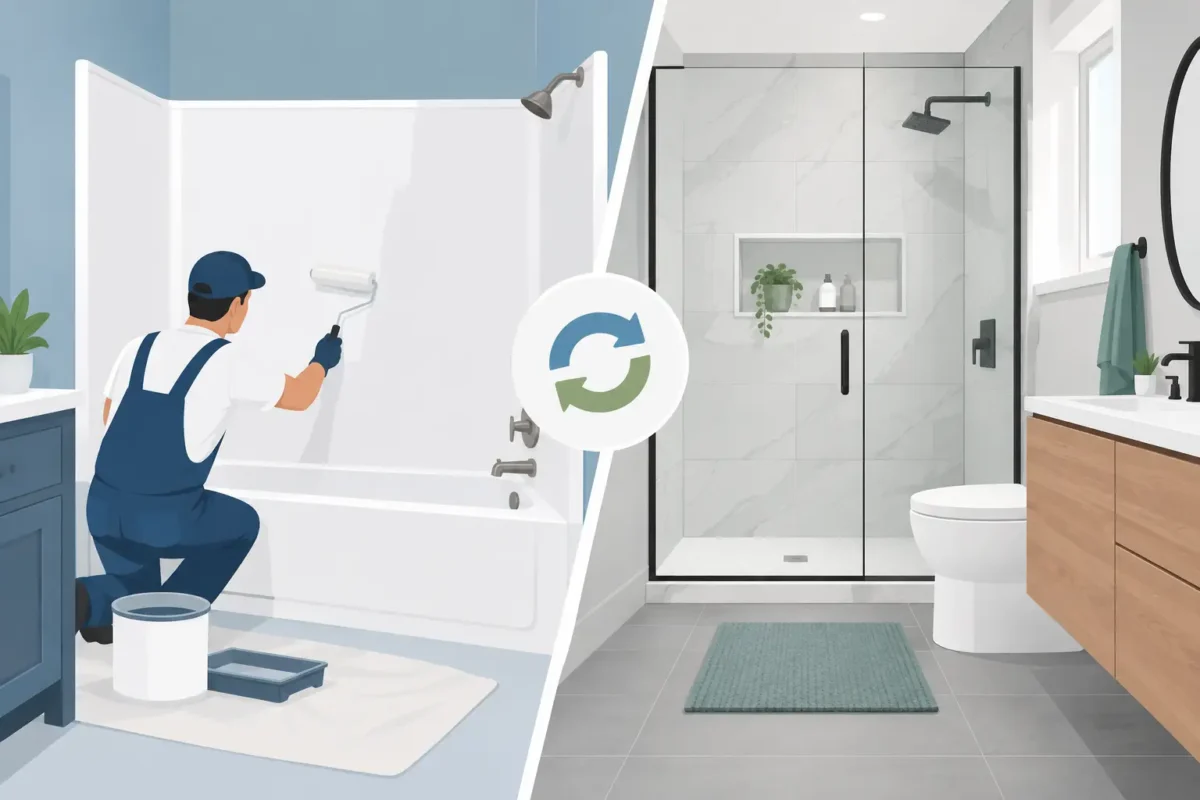
A bathroom can look tired long before it stops working. Stained tiles, a scratched bath, dated colours and worn vanity doors can make the whole room feel overdue for attention. When weighing up resurfacing versus bathroom replacement, the right choice comes down to more than appearance. The condition behind the finishes, your budget, how long you can be without the room and the property’s long-term plans all matter.
For some Brisbane homes, a carefully planned refresh creates a clean, modern result without the cost and disruption of a full renovation. For others, resurfacing would only cover a bigger problem – particularly where water damage, failed waterproofing or an impractical layout is involved.
Resurfacing versus bathroom replacement: what is the difference?
Resurfacing is a cosmetic upgrade to sound existing elements. It may include repainting walls and ceilings, refreshing tile grout, replacing silicone, repairing minor plaster damage, updating tapware and accessories, painting a vanity, refinishing a bath, or applying suitable coatings to selected surfaces. The goal is to improve presentation while retaining the existing room structure and major fixtures.
Bathroom replacement is a more comprehensive renovation. It commonly involves removing fixtures and finishes, repairing or altering walls and flooring, replacing plumbing fixtures, installing new tiles, waterproofing wet areas, and fitting a new vanity, shower screen, toilet and lighting. It also creates the opportunity to change the layout, improve storage or make the bathroom more functional for the people using it.
The distinction matters because a fresh surface cannot correct issues underneath it. A bathroom that is structurally dry, functional and well laid out may be a strong candidate for resurfacing. A bathroom with water ingress, loose tiles, movement in the floor or plumbing concerns needs a closer inspection before money is spent on cosmetic work.
When resurfacing is the practical choice
Resurfacing makes sense when the bathroom’s bones are in good condition. The plumbing works properly, the shower is watertight, tiles are secure and there are no signs of ongoing moisture damage. In this situation, the room may simply look dated rather than being genuinely worn out.
This approach is particularly useful for rental properties and homes being prepared for sale. A clean, neutral bathroom can improve first impressions without committing to a major build. Fresh paint, repaired walls, renewed silicone and updated hardware can make an older bathroom feel cared for. For property managers, these works can often be scheduled with less tenant disruption than a full strip-out.
Resurfacing can also be a sensible option when a larger renovation is planned for a later date. If the current bathroom needs to remain presentable and usable for another few years, targeted repairs and finishes can buy time while protecting the property’s appearance.
The key is being realistic about the result. A resurfaced bathroom can look substantially better, but it will still retain its original layout, fixture positions and many of its existing materials. It is a refresh, not a complete reinvention.
Common resurfacing work
A well-scoped refresh may involve painting ceilings and non-tiled wall areas, repairing cracks, replacing deteriorated sealant, regrouting where appropriate, refreshing vanity cabinetry and replacing dated mirrors, handles, taps, towel rails and light fittings. Ventilation should also be considered. Improving an exhaust fan or addressing mould-prone areas can help protect new finishes and keep the room looking better for longer.
Quality preparation is what separates a lasting refresh from a short-lived patch-up. Surfaces must be cleaned, repaired and primed correctly, and coatings need to suit a humid bathroom environment. Painting over peeling paint, damp plaster or mould without addressing the cause will not deliver a dependable result.
When bathroom replacement is worth the investment
A full replacement is usually the wiser option when the bathroom has underlying defects or no longer suits the property. Warning signs include persistent mould, a musty smell, swelling cabinetry, cracked or drummy tiles, soft flooring, leaks, damaged plaster in adjoining rooms, or deteriorated grout and silicone around the shower.
These symptoms do not always mean the entire bathroom must be removed, but they do justify proper investigation. Water can travel behind tiles, under flooring and into wall framing before it becomes obvious from inside the bathroom. Covering visible damage can delay the repair while allowing the issue to worsen.
Replacement is also the better path if the layout is the problem. A cramped shower, poor storage, an awkward vanity or a toilet position that limits movement cannot be fixed with paint and new accessories. Renovating gives you the chance to create a more useful space and select fixtures that suit how the household lives now.
For an owner-occupied home, a full bathroom renovation can add daily comfort as well as market appeal. In higher-value homes, a dated bathroom may sit out of step with the rest of the property and affect buyer perception. In commercial and strata settings, replacement may be necessary where a bathroom needs to meet practical durability, accessibility or presentation requirements.
Cost, downtime and value are connected
Resurfacing usually costs less upfront because there is less demolition, fewer trades and less material involved. It can also be completed faster, which is valuable when there is only one bathroom in the home or when a rental property needs to return to the market promptly.
However, the lowest initial cost is not always the best value. If coatings or minor repairs are applied to a bathroom with failing waterproofing, the room may require a full renovation sooner than expected. That can mean paying twice for labour, materials and disruption.
A replacement has a higher upfront cost because it requires more planning and specialist work. Plumbing, electrical work, waterproofing, tiling and carpentry may all be involved. The timeline is also longer, with work needing to happen in the correct order and materials needing time to cure before the room can be used.
The value calculation should match your objective. If you need a tidy, functional bathroom for the next two years, resurfacing could be an efficient decision. If you plan to stay long term, have repeated maintenance issues or want to reposition the property for sale, replacement may offer better value over its lifespan.
Do not ignore waterproofing and ventilation
Bathrooms deal with moisture every day, and the shower is the most critical area. Waterproofing sits behind the visible surfaces, so its condition cannot be judged by appearance alone. Cracked grout is not automatically proof that waterproofing has failed, but it should not be ignored if it appears alongside leaks, loose tiles or damage outside the shower area.
Ventilation also affects the life of paint, plaster, cabinetry and sealants. Brisbane’s humidity can make poor airflow especially noticeable. If mirrors stay fogged for a long time, mould returns quickly or paint peels near the ceiling, the exhaust system and general airflow should be assessed as part of the scope.
A professional should identify whether a repair is suitable or whether the wet area needs to be rebuilt properly. This is where a detailed quote is more useful than a quick visual estimate. It should separate cosmetic work from repairs, outline what is included and flag any items that may only become visible once surfaces are opened.
Choosing the right scope for your property
Start by asking what you need the bathroom to achieve. For a rental, that may be a clean, durable room that is easy to maintain between tenancies. For a family home, it may be better storage, safer access and finishes that will handle daily use. For a sale campaign, the focus may be creating a tidy, cohesive presentation without overcapitalising.
Then assess the condition honestly. Look beyond colour and style. Check for evidence of leaks, mould, damaged flooring, loose surfaces and inadequate ventilation. Consider the age of the bathroom and whether previous patch repairs have already been carried out. A room that has needed repeated fixes may be telling you that its useful life is nearing an end.
Finally, factor in the rest of the property. Repainting an adjoining hallway, repairing plaster after an old leak or updating door hardware may help a bathroom refresh feel more complete. One contractor who can coordinate painting, repairs and renovation support can reduce handovers and keep the work moving in the right sequence. M&M Handyman can help Brisbane property owners assess practical upgrade options and prepare a clear scope of work.
A good bathroom decision is not about choosing the biggest project. It is about spending where it will solve the real problem, protect the property and leave the room ready for the way it needs to be used.