
Timber Versus Laminate Benchtops for Your Kitchen
November 16, 2026by Uncategorized0
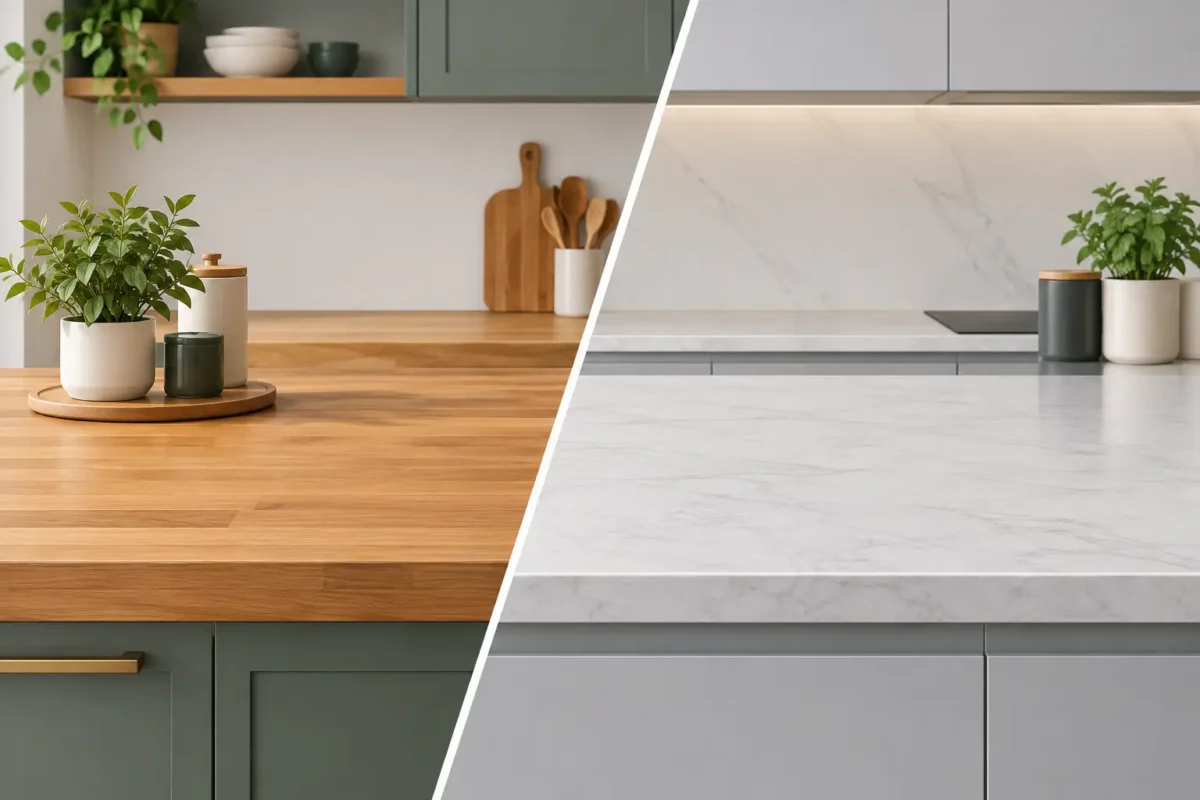
A benchtop has to do more than look good on handover day. It deals with wet dishes, hot pans, school lunches, cleaning products and years of daily use. When weighing up timber versus laminate benchtops, the better choice depends on how the kitchen will be used, who will maintain it and what the renovation needs to achieve.
For a Brisbane family home, a feature timber top can bring warmth to a clean, modern kitchen. For an investment property, laminate may be the more practical choice because it is cost-effective, easy to replace and requires very little ongoing care. The right answer is rarely about one material being universally better than the other.
Timber versus laminate benchtops: the practical differences
Timber benchtops are made from solid timber or joined timber staves, often in species such as oak, blackbutt, spotted gum or bamboo. Every top has natural variation in grain and colour, which is a large part of its appeal. It can make a kitchen feel less clinical, particularly where cabinetry is white, grey or darker painted finishes.
Laminate benchtops have a durable decorative surface bonded to a board substrate. Modern laminate is available in a wide range of stone-look, timber-look, concrete-look and plain colours. Quality laminate can look sharp and contemporary without demanding the budget of natural materials.
The difference becomes clearer after the kitchen is in use. Timber is a living material that needs regular protection. Laminate is designed for convenience but cannot be sanded back or repaired in the same way if its surface is badly damaged.
Appearance and design flexibility
Timber suits kitchens where warmth, texture and a more individual finish are priorities. It works especially well as an island bench, breakfast bar or a smaller feature section paired with another benchtop material. A timber top can also be sanded and refinished when it starts showing its age, so it can develop character rather than simply looking worn out.
That said, timber is not automatically suited to every kitchen. A dark timber surface may make a compact or low-light room feel heavier. Strongly grained timber can also compete with busy splashbacks, patterned floors or detailed cabinetry. Good design comes from balancing the materials, not putting every feature into one room.
Laminate offers more predictable colour and pattern consistency. This is valuable in rental properties, commercial kitchenettes and larger renovation projects where several units need to match. It is also an effective way to achieve a timber-look finish without the maintenance that comes with genuine timber.
While higher-quality laminates have improved considerably, close inspection still usually reveals the difference between a printed timber pattern and real grain. If the goal is a premium, natural focal point, solid timber has an advantage. If the goal is a clean finish that coordinates with the rest of the property, laminate has plenty of design options.
Cost: look beyond the initial quote
Laminate is generally the lower-cost option to supply and install. It is widely available, straightforward to fabricate and well suited to projects with a fixed budget. For landlords preparing a property between tenancies, this can free up funds for painting, repairs, appliances or bathroom improvements that may have a greater impact on presentation.
Timber costs more upfront, particularly when a quality species, custom edging, cut-outs and professional finishing are included. It should be treated as a long-term finish rather than a low-cost surface. The investment can make sense in an owner-occupied home where the kitchen is a key part of the renovation and the owners are prepared to care for it.
It is also worth considering replacement costs. A deeply damaged laminate top often needs replacement, especially where water has entered the board beneath. A scratched, stained or tired timber top may be able to be sanded, repaired and resealed. Over a long ownership period, that repairability can change the value equation.
Water, heat and daily wear
Water is the main enemy of both materials, but it causes different problems. Timber can absorb moisture if its protective coating fails or is not maintained. Around sinks, dishwashers and tapware, this may lead to staining, swelling, movement or splitting. Brisbane’s humid conditions make proper sealing and ventilation particularly worthwhile.
Laminate resists everyday splashes well while its surface and joins remain intact. However, water entering an exposed edge, a poorly sealed sink cut-out or a damaged seam can cause the particleboard core to swell. Once that happens, the surface will not flatten out again. Attention to joins and cut-outs during installation is just as important as the benchtop selected.
Neither material is a direct landing zone for hot cookware. Timber can scorch or discolour, while laminate can blister, crack or separate under high heat. Use trivets and do not place hot baking trays straight from the oven onto the bench. This simple habit prevents many avoidable call-outs and replacement costs.
For scratches and impact marks, timber is more forgiving. Light damage can often be sanded and oiled or recoated. Laminate holds up well to normal household use but can chip along edges or scratch with sharp objects. Always use a chopping board, regardless of the benchtop material.
Maintenance requirements matter
A laminate benchtop is the easier option for busy households and managed properties. Clean it with a soft cloth and mild detergent, avoid abrasive scourers, and wipe spills before they sit in joins. There is no routine oiling or resealing programme to manage.
Timber needs more active care. The exact maintenance schedule depends on whether it has been finished with oil, polyurethane or another coating, and on how heavily the kitchen is used. Oiled tops generally need periodic re-oiling. Film finishes can last longer but should be checked for wear, cracking and areas where water could penetrate.
Harsh cleaners are a poor choice for timber. Bleach, strong degreasers and abrasive products can strip or dull the finish. A damp cloth, mild cleaner and prompt drying are usually enough for day-to-day cleaning. Homeowners who enjoy maintaining natural finishes may find this entirely manageable. For a property manager overseeing multiple tenancies, it can become an unnecessary risk.
Which option suits your property?
For a family home where the kitchen is central to everyday living, timber can be a worthwhile feature if you value natural materials and will keep up with maintenance. It is particularly effective on an island bench, where it brings visual warmth without placing timber directly around the sink.
For a rental property, laminate is usually the safer recommendation. It provides a neat finish, controls the renovation budget and avoids relying on tenants to oil or reseal a natural surface. Choose a quality product, specify durable edging and make sure the sink area is properly sealed.
For a property being prepared for sale, the decision comes down to the market position and condition of the existing kitchen. Replacing a worn laminate top with a modern laminate design can deliver a strong visual lift for sensible cost. In a higher-end renovation, a timber feature bench may help create the point of difference buyers remember during inspections.
Commercial settings, office kitchens and childcare facilities generally benefit from laminate’s low-maintenance performance. In these spaces, consistent appearance, easy cleaning and straightforward future replacement tend to matter more than the character of natural timber.
Installation quality protects either choice
A well-chosen benchtop can still fail early if it is poorly installed. Accurate measurements, level cabinetry, correctly supported overhangs and carefully sealed cut-outs all affect the finished result. Sink and cooktop openings need particular care, as these are common points for moisture damage.
Before committing, inspect samples in the room where they will be installed. Natural and artificial lighting can change how a timber tone or laminate pattern reads against cabinetry, walls and flooring. It also helps to discuss how the space will be used rather than choosing solely from a showroom display.
A kitchen renovation should make daily life easier and protect the value of the property. Choose timber when you want a repairable natural feature and are ready to maintain it. Choose laminate when reliable performance, easy care and budget control are the priority. A considered finish, fitted properly, will serve the kitchen far better than a fashionable choice that does not suit the way the property is actually used.